
Reliable Freight Forwarder in Saudi Arabia: Key Traits
A Freight Forwarding Companies in Saudi Arabia handles more than paperwork and truck bookings. It sits between your supplier, the port authority, customs officials, and your warehouse floor, and one weak link in that chain can leave a container at Jeddah Islamic Port for days while storage fees climb. That gap between a forwarder who just moves boxes and one who actually manages risk is what separates a dependable partner from a costly mistake.
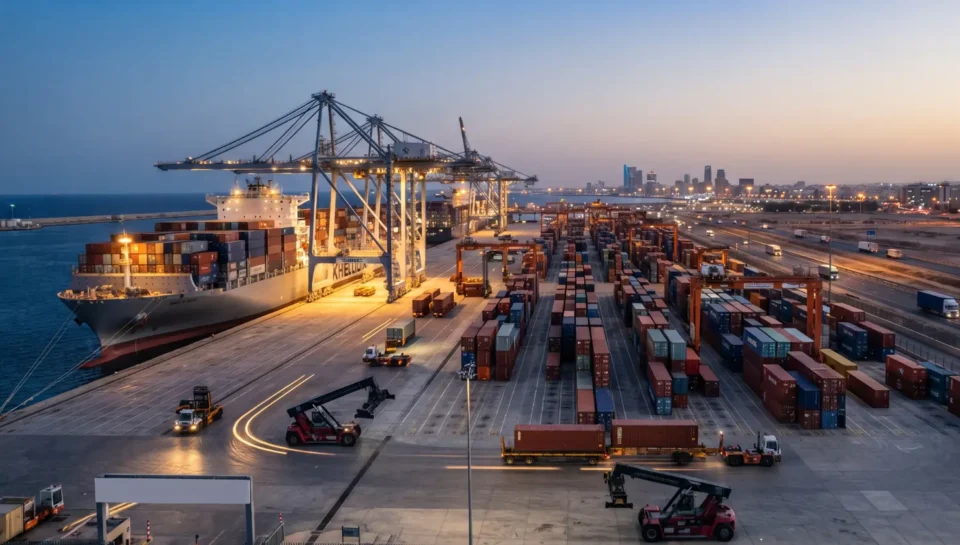
Saudi Arabia’s position between three continents makes it one of the busiest transit corridors in the region. Cargo moving through the Kingdom often connects Asian manufacturing hubs to European and African markets, which means customs procedures, port capacity, and inland transport all have to work together without friction. A Saudi logistics company that understands this geography plans routes differently than one working from a generic global template.
Table Of Contents
What Makes a Freight Forwarder in Saudi Arabia Different?
Freight forwarding companies in Saudi Arabia operate under Zakat, Tax, and Customs Authority regulations that shift periodically, particularly around HS code classifications and import duty schedules. A forwarder who tracks these updates in real time can steer a shipment around a documentation error before it reaches the port gate. One who doesn’t will leave the client explaining the delay to their own customer.
Coverage also matters. Khelogix Global, headquartered in Al Khobar, runs operations across air freight, sea freight, land transportation, project logistics, and cargo chartering, which lets a single shipment move through multiple modes without changing hands between different vendors. Fewer handoffs generally mean fewer chances for cargo to get misplaced or delayed at a transfer point.
Industry-Specific Handling
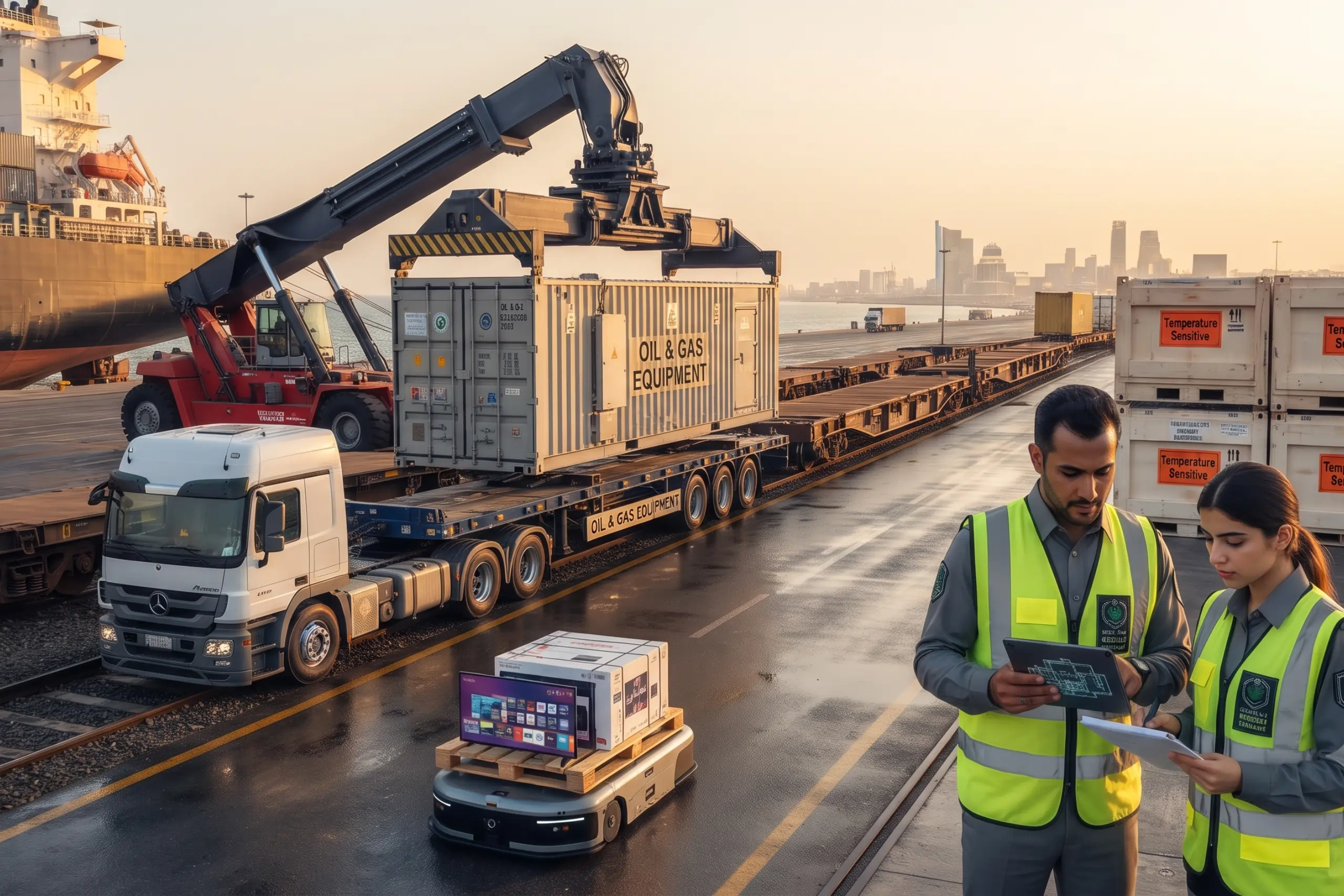
Not every shipment behaves the same way in transit. Oil and gas equipment needs different securing methods than retail goods moving through e-commerce fulfillment. Healthcare shipments often carry temperature or handling sensitivities that construction materials never face. Khelogix works across oil and gas, retail, e-commerce, healthcare, construction, automotive, FMCG, and manufacturing sectors, and each of these brings its own documentation requirements and physical handling rules.
A forwarder without sector experience tends to apply one process to everything. That works fine until it doesn’t, usually at the worst possible moment, like a customs officer flagging a shipment because the paperwork template didn’t match what the cargo actually required.
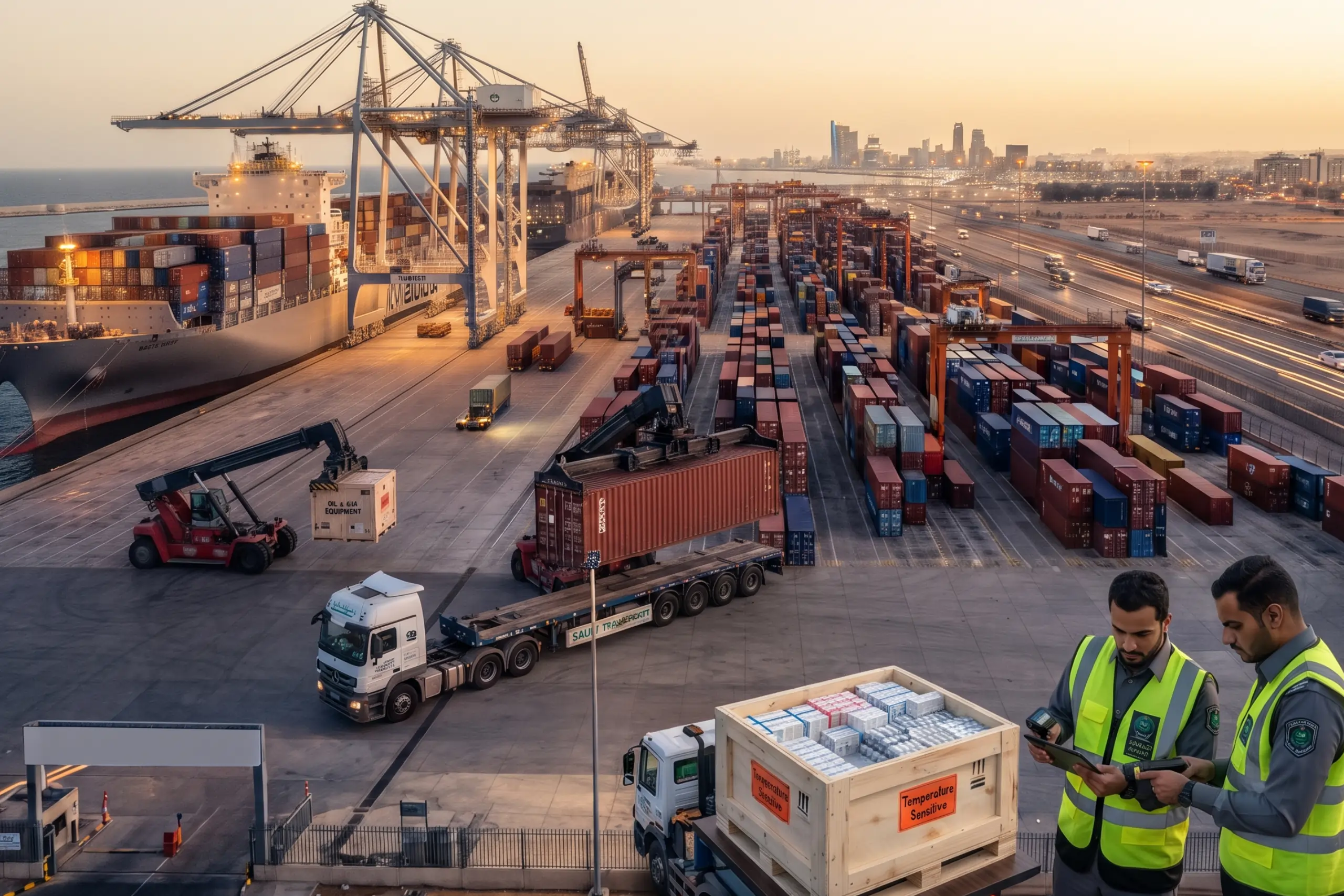
Process Transparency and Tracking
Real-time visibility has become a baseline expectation rather than a premium add-on. Shipments should be trackable from planning through delivery, with GPS monitoring and coordinated communication between the logistics team and the client at each stage. According to the World Bank’s Logistics Performance Index, countries with stronger tracking infrastructure and customs efficiency consistently score higher on overall trade facilitation.
A structured four-stage approach, covering planning and consultation, secure transportation, continuous tracking, and delivery support, gives clients a clear picture of where their cargo sits at any point. That structure also makes it easier to catch a delay early instead of discovering it after the fact.
Scale and Track Record
Volume tells part of the story. Khelogix has completed more than 5,000 shipments and built over 1,200 client partnerships across roughly 50 global connections, figures that reflect sustained operational activity rather than a company still working out its processes. None of that guarantees a flawless shipment every time. What it does show is a company that has handled enough variation in cargo type, route, and regulatory hurdle to have systems in place for the ones that go sideways.
Customs Clearance as a Deciding Factor
Ask about customs clearance specifically. It’s often the single biggest source of delay for cargo moving into or out of Saudi Arabia, and a forwarder’s familiarity with local port procedures at Jeddah, Dammam, or King Abdulaziz Port can shave days off a clearance timeline. This is worth a direct conversation before signing any agreement, not an assumption based on a company’s website copy. You can reach the Khelogix team through their contact page to walk through specific route and cargo requirements before committing to a plan.
Final Thoughts
Choosing a freight forwarder in Saudi Arabia comes down to a handful of concrete questions. Does the company have direct experience with your industry’s cargo type? Can they explain their customs clearance process without vague reassurances? Do they offer real tracking rather than a promise to “keep you updated”? A Saudi logistics company that answers these clearly, backed by an actual operational history, tends to be the one that keeps your supply chain moving when conditions get difficult. What does your current shipping process look like, and where is it losing time?
FAQ
The shipping line owns the vessel and moves your box from port A to port B. That’s it. Everything else, the paperwork, the trucking on either end, the warehouse handoff, the customs headache, falls to the forwarder. If you’ve ever wondered why your invoice has ten line items instead of one, that’s why. You’re paying for coordination, not just transport.
It depends on who you ask, honestly, and depends on your paperwork. Clean documentation with the right HS codes can clear in a day, sometimes less. Get a classification wrong or forget a certificate, and you’re looking at a week, maybe more, sitting at Jeddah or Dammam while someone sorts it out. This is the single biggest thing worth grilling a forwarder on before you sign anything.
One team, ideally. Splitting air and sea across two providers means two sets of paperwork, two points of contact, and twice the chance something falls through the cracks between them. If a forwarder already runs both, and coordinates the customs side for each, that’s usually the simpler route for anything moving in multiple shipments.
More than people expect. A construction shipment and a healthcare shipment don’t behave the same way in transit, and they definitely don’t clear customs the same way either. A forwarder who’s only ever handled retail cargo might not know the extra certification a medical shipment needs, and that gap tends to surface at the worst possible moment, right at the port.
Start with their customs track record at the specific port you’re shipping through, not just “do you do customs.” Ask how tracking works while your cargo is moving, not after it arrives. And ask what their actual process looks like when something goes wrong, because something eventually will. A company that answers with specifics is worth more than one that answers with confidence.