Do You Really Need Commercial Cargo Insurance?
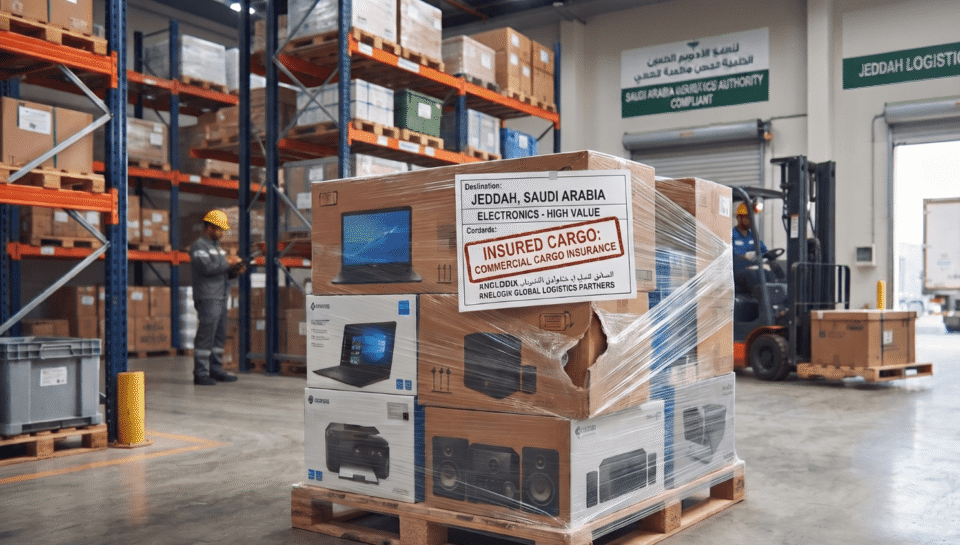
A pallet of electronics sits in a warehouse in Jeddah, waiting on a truck that never shows up on schedule. By the time it does, the shrink wrap has torn, and two boxes are missing. This is the kind of loss commercial cargo insurance exists to cover, and it happens more often than most business owners expect once goods leave their own four walls.
Freight moves through hands a shipper never sees. A forklift operator at a port, a driver on a cross-border route, a warehouse worker during a shift change. Each handoff is a point where something can go wrong, and standard carrier liability rarely covers the real value of what was lost. Most freight carriers cap their liability by weight, not by declared value, which means a container of medical equipment or industrial parts can be worth far more than what a carrier is obligated to pay out.
What Cargo Insurance Coverage Do Saudi Businesses Actually Get?
Cargo insurance coverage Saudi typically falls into a few categories. All-risk policies protect high-value or delicate shipments against a broad range of events, from theft to accidental damage. Freight insurance extends across sea and land transport modes, which matters for businesses moving goods between the Kingdom and the UAE by truck as often as by ship. Marine cargo insurance is the specialized layer for ocean freight, built around the specific risks of that mode: rough weather, container loss overboard, and incidents during port handling.
Khelogix Global works this way for shippers moving freight across Saudi Arabia and the UAE. The process starts with a quote based on cargo type, declared value, origin, destination, and transport mode, using terms from reputable insurers active in the region. Once a shipper approves coverage and the premium is paid, the policy issues right away.
Open Policies vs Single-Shipment Coverage
Not every business ships the same way, so coverage structure matters. A business shipping occasionally, maybe a single piece of equipment for a project, is often better served by one-time coverage tied to that shipment alone. Khelogix Global offers both structures, so the choice comes down to shipping frequency rather than a fixed package.


Why Does Documentation Speed Matter?
Insurance certificates aren’t just paperwork. Banks often require them before releasing payment under a letter of credit, and customs authorities may ask for them during clearance. For open policies, certificates for declared shipments can be issued the same day or the next, which keeps a shipment from stalling at a checkpoint over a missing document. This detail matters more to businesses working under time pressure than the coverage amount itself.
What Happens When a Claim Actually Comes Up?
A claim starts the moment damage or loss is noticed, not after the shipment reaches its final destination. Khelogix Global coordinates directly with insurers and surveyors during this stage, and settlements are worked out based on the policy terms and the actual loss recorded, not a flat estimate.
There’s also a compliance angle worth knowing. Saudi Arabia’s insurance sector is overseen by the Insurance Authority, the body responsible for licensing and regulating insurers operating in the Kingdom. Working with insurers active through a recognized logistics partner keeps a shipper on the right side of that framework, rather than relying on informal or undocumented cover.
Working With a Saudi Logistics Company on Insurance
Pairing cargo insurance with the same Saudi logistics company handling the physical shipment removes a layer of friction. There’s no separate broker to loop in when a route changes or a shipment gets rescheduled, and claims documentation lines up with the freight paperwork already on file. For businesses juggling customs clearance, warehousing, and transport across multiple providers, this kind of consolidation tends to save more time than people expect.
Final Thoughts
Cargo insurance isn’t something every shipment strictly requires by law, but the cost of going without it shows up fast the first time a container is delayed at a port or a shipment goes missing between hand-offs. Businesses shipping high-value or time-sensitive goods across Saudi Arabia and the UAE are usually better off treating it as a standard line item rather than an afterthought. What does your current shipping volume look like, and does it lean towards frequent freight or the occasional large shipment?
FAQ
Not automatically, no. Plenty of shipments move without any cover, and nothing goes wrong. But banks handling a letter of credit will often refuse to release payment without proof of insurance, and some buyers write it straight into the purchase contract. It ends up less a legal box to tick and more a practical one, depending on who else is involved in the deal.
Think of freight insurance as the umbrella. It covers goods moving by sea, by land, and sometimes by air, whatever mode the shipment happens to take. Marine cargo insurance sits underneath that, built for one job: ocean freight. Rough weather, a container that slips during loading, and damage during port handling. That’s the territory it’s meant for.
Once you approve a quote and pay the premium, policy issuance can happen right away. For open policies with declared shipments, certificates are often ready the same day or the next, which matters if customs or a bank is waiting on the paperwork.
It depends on how often you ship. Frequent shippers usually save time and money with an open policy set on annual terms. Occasional or one-off shipments, like a single piece of project equipment, are often cheaper to insure individually.
Call it the moment you notice it; don’t wait until the shipment reaches its final stop. Get photos. Hold onto the survey report and the original shipping documents, since a claim without paperwork moves nowhere. From there, settlement comes down to what the policy actually says and what the documented loss adds up to, not a guess someone makes on the spot.