


Freight Forwarder List: Choosing the Right Partner
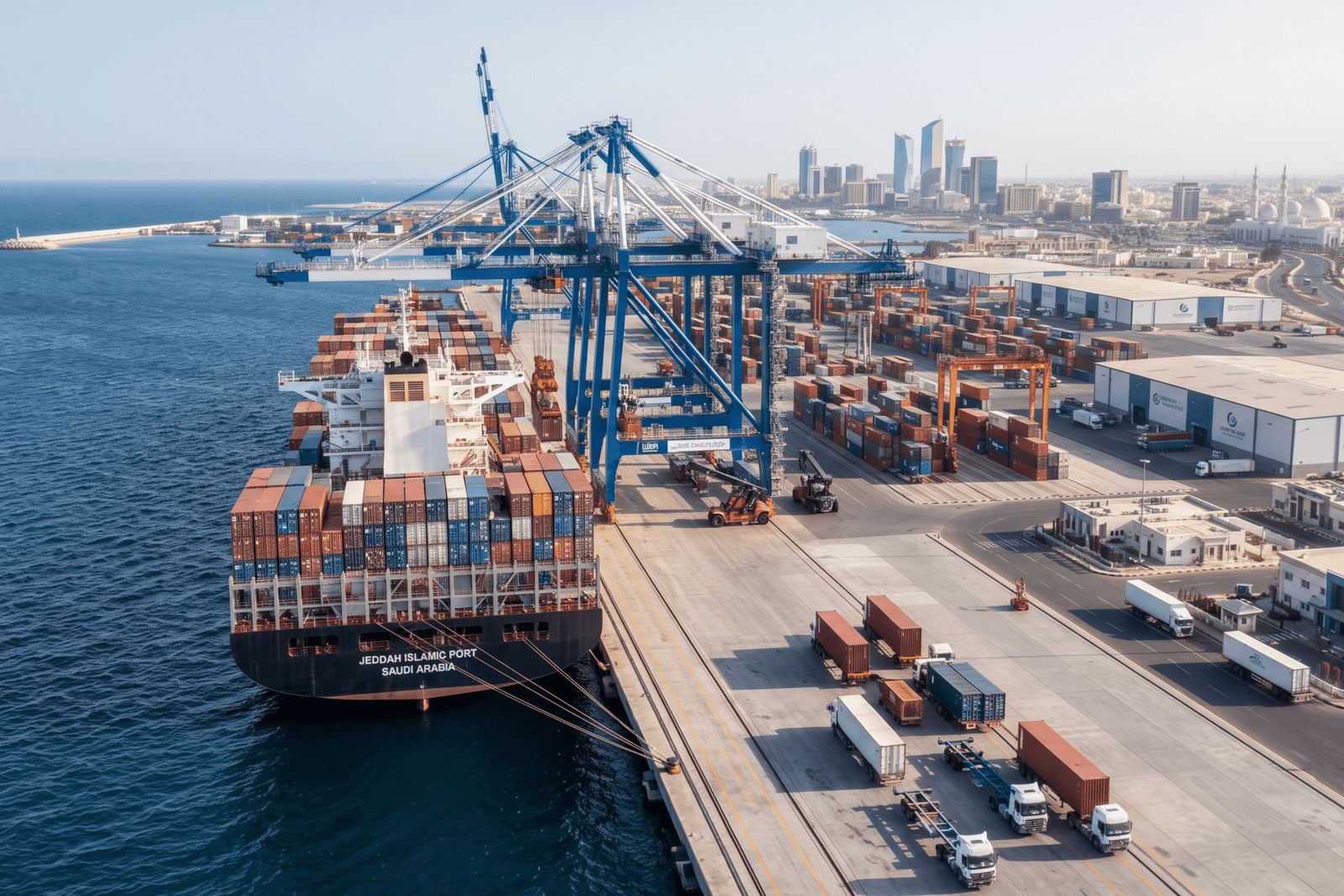
A container sitting uncleared at Jeddah Islamic Port for six extra days costs more than storage fees. It costs the trust of whoever is waiting on the other end for their stock. That single scenario is why building a proper freight forwarder list matters more than most importers realize until they’ve lived through a delay.
Saudi Arabia’s trade volume keeps growing, and with it, the number of companies claiming to move cargo “anywhere, anytime.” Sorting genuine capability from a polished website takes a different approach than typing a search query and picking the first three results.
What Do Freight Forwarding Companies Actually Handle?
Freight forwarding companies in Saudi Arabia rarely do just one thing well. A forwarder built for FCL container shipping might have no real experience with breakbulk or oversized project cargo. Another might run air freight smoothly but subcontract every road leg to a third party, adding a layer you can’t see or control.
Khelogix, for instance, structures its service scope around ocean and air freight forwarding (FCL, LCL, breakbulk, and out-of-gauge project cargo), road transportation across the region, and warehousing through both 3PL and 4PL models. That range matters less as a marketing point and more as a practical filter. If a shipment needs bonded or temperature-controlled storage partway through its journey, a forwarder without that capability in-house will hand it off, and every handoff is a point where things go missing or slow down.
Ask any name on your list a blunt question: which parts of the shipment do they physically manage, and which do they broker out? The answer tells you more than any service page will.
Where Customs Clearance in Saudi Arabia Fits Into the Decision
Customs clearance in Saudi Arabia runs almost entirely through FASAH, the electronic single window operated by the Zakat, Tax, and Customs Authority. Declarations, document submission, and fee payment all happen on this platform, and shipments are sorted into green, yellow, or red inspection tracks depending on risk classification.
ZATCA has pushed hard to compress clearance times. Shipments that once took up to twelve days to clear now move through the clearance within two hours initiative in a fraction of that time, provided documentation is complete and accurate on first submission. That last part is the catch. A forwarder unfamiliar with FASAH’s document requirements, or one that treats customs as an afterthought rather than a core competency, is the reason shipments end up in a yellow or red track that could have stayed green.
This is where a dedicated customs clearance service earns its place on a shortlist. Coverage across major Saudi ports, airports, and land borders means one point of accountability instead of a patchwork of local agents.
Reading a Cargo Service Beyond the Sales Pitch
A cargo service in Saudi Arabia looks similar on paper across most providers. Ocean freight, air freight, road haulage, and warehousing. The differences show up in the details nobody puts on the homepage banner.
Does the forwarder handle time-critical or temperature-controlled shipments, and what happens if a cold chain breaks mid-transit? Do they move live animal shipments, which require licensing most general cargo agents don’t hold? Can they run cross-border GCC movements without re-routing everything through a single hub, adding days to a delivery that should take hours?
Saudi Arabia’s Ministry of Transport and Logistics Services has been explicit about the Kingdom’s ambition to become a logistics hub linking Asia, Europe, and Africa under Vision 2030. That national push means infrastructure and port capacity are expanding fast, but it also means the number of forwarders entering the market is expanding just as fast. Volume of new entrants is not the same as depth of experience.

Building a Freight Forwarder List That Holds Up
Start with licensing and accreditation, then work down to specifics. A forwarder should be able to name the exact ports and border crossings they operate through regularly, not just the ones listed on a coverage map. Ask for a reference shipment similar to yours, ideally one involving customs clearance rather than a straightforward domestic move.
Check how they handle documentation errors. Every forwarder eventually deals with a missing certificate of origin or an HS code dispute. The ones worth keeping on your list are the ones who can describe, specifically, how they resolved a past case rather than promising it “won’t happen.”
Finally, weigh project logistics capability separately from routine cargo. Heavy-lift shipments and vessel chartering require a different skill set entirely, and a forwarder strong in daily container movement may have no real bench for it.
Final Thoughts
A freight forwarder list is only useful if it gets shorter through elimination, not longer through collection. Three or four names with verified customs handling, honest answers about subcontracting, and a track record in your specific cargo type will serve a business better than fifteen names with identical service pages.
What does your current shipment mix actually demand: routine container moves, project cargo, or something that touches customs clearance on every single run?
FAQ
Ask them to name the FASAH-registered broker who files the declaration. If they can’t answer immediately or redirect you to “our partner,” clearance is being outsourced. Direct handling usually means faster resolution when documents need correction mid-process.
A certificate of origin that doesn’t match the invoice details is the single biggest culprit. HS code errors run a close second, especially on mixed shipments with several product categories. Get the packing list, invoice, and certificate aligned before submission, since that alone prevents most yellow-track holds at Saudi ports.
Depends entirely on cargo type and route consistency. Smaller forwarders with deep local knowledge of specific Saudi ports sometimes outperform large firms on responsiveness. Large firms usually win on cross-border GCC network breadth and project cargo capacity.
Plenty of forwarders do, especially the ones running 3PL or 4PL warehousing alongside their freight operations. That combination matters most for bonded or temperature-controlled cargo. Splitting warehousing and freight between two providers adds a handoff point, and handoff points are exactly where damaged pallets and missing paperwork tend to surface.
Under ZATCA’s current initiatives, well-documented shipments can clear in a couple of hours rather than days. Incomplete paperwork or a red-track inspection can still extend that to several days, so document readiness matters more than provider choice alone.