

Freight Forwarding Logistics Company: 10 Questions to Ask
A container sitting at Jeddah Islamic Port with the wrong HS code on its paperwork can stay there for weeks. That single detail, buried in a customs form, is usually the difference between a shipment that clears on schedule and one that turns into a monthly storage bill. Picking a freight forwarding logistics company is not really about who answers the phone fastest. It comes down to who catches problems like that before they happen.
Most businesses only think hard about this choice after something has already gone wrong. A shipment missed a sailing window. A truck arrived at a border crossing after the yard closed. By then the checklist arrives too late. Below are ten questions worth asking before you sign anything, plus a look at what separates a forwarder who manages the full route from one who just books space and hopes for the best.
Table Of Contents
| S.No | Section |
|---|---|
| 1 | Why Does the Right Freight Forwarding Logistics Company Matter? |
| 2 | Land, Sea, and What Happens at the Border |
| 3 | Final Thoughts |
| 4 | FAQ |
Why Does the Right Freight Forwarding Logistics Company Matter?
There is a real gap between a carrier and a forwarder. A carrier moves your box from point A to point B. A freight forwarding logistics company decides the port, the carrier, the Incoterm, the HS code, and who is responsible for each document along the way. That second job is where shipments either move cleanly or stall.
Saudi Arabia’s import and export volumes have grown fast, and that growth has pulled a wide range of firms into the market. Not every option among the freight forwarding companies in Saudi Arabia handles documentation, customs, and last-mile delivery under one roof. Some hand off between three or four separate vendors, and every handoff is a place where accountability can disappear. Ask directly whether one team owns your shipment from booking to delivery or whether you will be coordinating between multiple parties yourself.
Here are ten questions to bring to that conversation:
- 1. Do you manage documentation and customs clearance directly, or outsource it to a third party?
- 2. Which HS codes and Incoterms apply to my specific cargo, and can you explain why?
- 3. What will happen if my shipment misses a scheduled sailing or flight?
- 4. What's the cutoff for choosing LCL over a full container?
- 5. Whose truck is actually crossing the border between Saudi Arabia and the UAE, yours or a subcontractor's?
- 6. How is pricing structured, and are there charges that only appear after booking?
- 7. What real-time tracking do you offer once cargo is in transit?
- 8. Do you carry experience with my specific cargo type, such as temperature-controlled goods or heavy machinery?
- 9. Who do I contact if there is a problem, and how fast is that response typically?
- 10. Is cargo insurance included, optional, or something I need to arrange separately?

Land, Sea, and What Happens at the Border
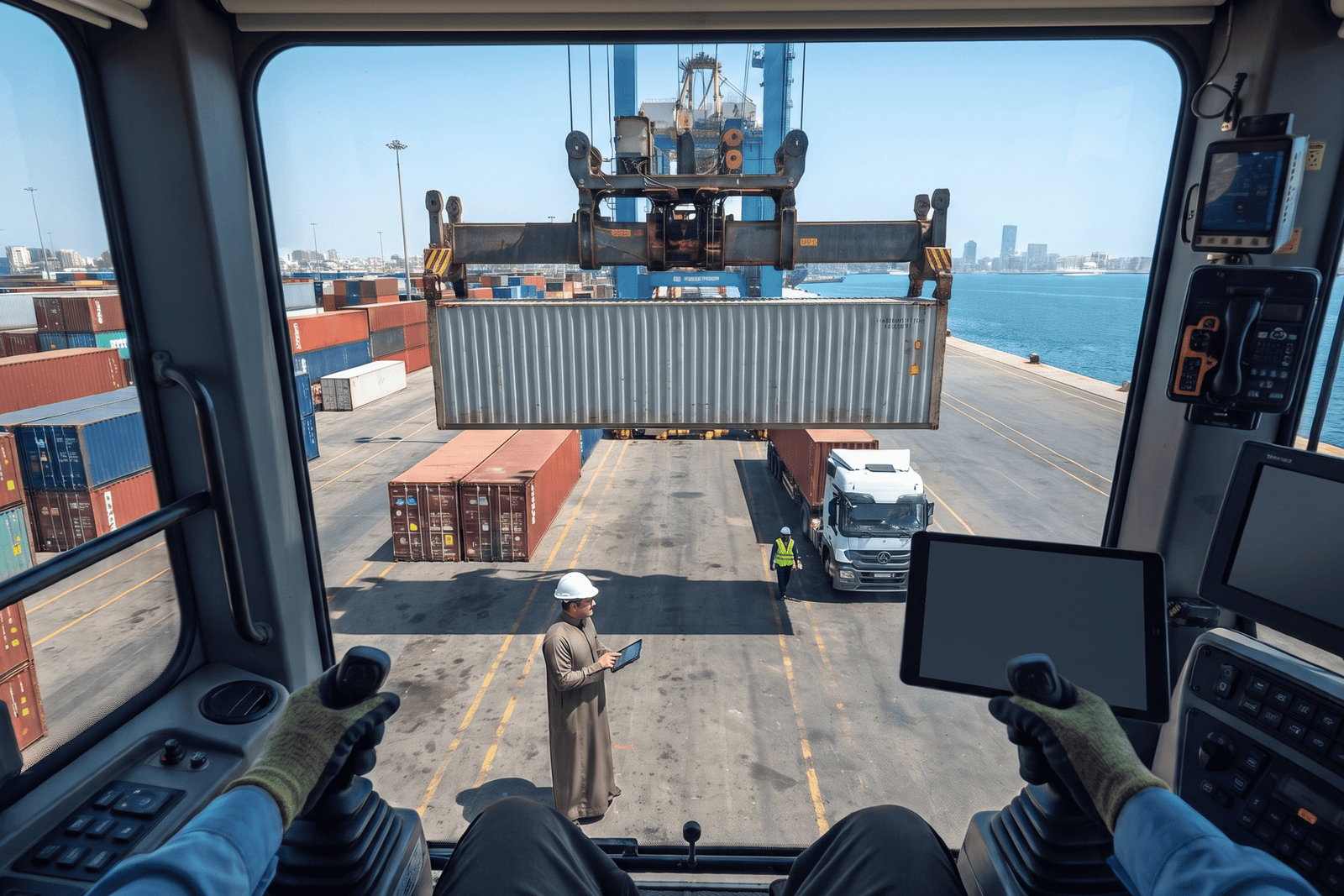
Sea freight shipping and land transportation services solve different problems, and a forwarder worth hiring should be able to explain which one fits your shipment without pushing you toward whichever mode pays them more.
Ocean freight makes sense for bulk goods, raw materials, and anything where transit time matters less than cost per unit. FCL suits full container loads. LCL lets smaller shipments share space and split the cost, which matters if you are not filling a 20-or 40-foot container on your own. A forwarder that has real partnerships with major shipping lines can offer flexibility when a port gets congested or a sailing gets rescheduled, rather than leaving you stuck.
Land transportation services matter most for cross-border movement, particularly between Saudi Arabia and the UAE. Border crossings like Al Batha involve their own paperwork requirements, and a forwarder who handles this regularly should be able to walk you through documentation before your truck ever leaves the yard. Ask whether they offer both Full Truckload and Less Than Truckload options, since paying for a dedicated truck when you only need partial space adds unnecessary cost.
If your cargo needs special handling (refrigerated goods, construction equipment, or fragile materials on A-frame trucks), confirm the forwarder has the equipment on hand rather than the ability to source it after your booking is confirmed.
Final Thoughts
None of these ten questions are complicated on their own. Together, they reveal whether a freight forwarding company actually owns the process or is reselling someone else’s network with a markup attached. The forwarders worth working with will answer specifics without hesitation. Vague answers about documentation, pricing, or accountability are worth treating as a warning sign, not a formality to work around.
Before your next shipment, which of these ten questions would your current provider struggle to answer clearly?
FAQ
Freight moves. A missed sailing shouldn’t. If your cargo gets bumped from a scheduled departure, a forwarder handling things properly rebooks the next available slot and tells you before you have to ask. What separates a decent one from a bad one is whether that update comes in hours or after you’ve already called twice.
Container size decisions come down to volume, honestly. Filling a 20-or 40-foot box on your own means FCL makes sense. Smaller loads share space under LCL and split the cost accordingly. A forwarder worth using will ask what you’re shipping before recommending either option.
Land transport across the Saudi-UAE border runs through crossings like Al Batha, and paperwork there trips up more shipments than the actual driving does. Some forwarders manage this directly with their own drivers and documentation team. Others quietly pass it to a third party, which adds a layer you can’t see into. Worth asking outright which setup you’re getting.
Pricing gets murky fast once a shipment is already booked. A transparent quote covers freight, documentation, and expected fees upfront. Watch for storage charges, demurrage, or “handling fees” that show up on the final invoice without warning. If a forwarder can’t explain their pricing structure in plain terms before you sign, that’s usually a sign of what’s coming later.
Cargo insurance rarely gets brought up unless you ask first. Basic carrier liability covers very little, sometimes just a fraction of actual value. For anything worth real money, a separate marine cargo policy closes that gap for a relatively small added cost.