
How Air Freight to Saudi Arabia Works: Costs and Timelines
Air freight to Saudi Arabia moves through a sequence most shippers never actually see: booking, security screening, palletizing, flight assignment, then customs clearance on arrival. Companies moving industrial spare parts, temperature-sensitive medicine, or high-value electronics into the Kingdom lean on this method because ocean freight, for certain shipments, simply takes too long to matter.
The appeal is straightforward. A shipment that would sit at sea for three or four weeks can land within days. But “days” is not a fixed number, and the cost behind it depends on more than distance. Here’s what actually shapes the process, from booking to delivery.
How Does Air Freight to Saudi Arabia Actually Move?
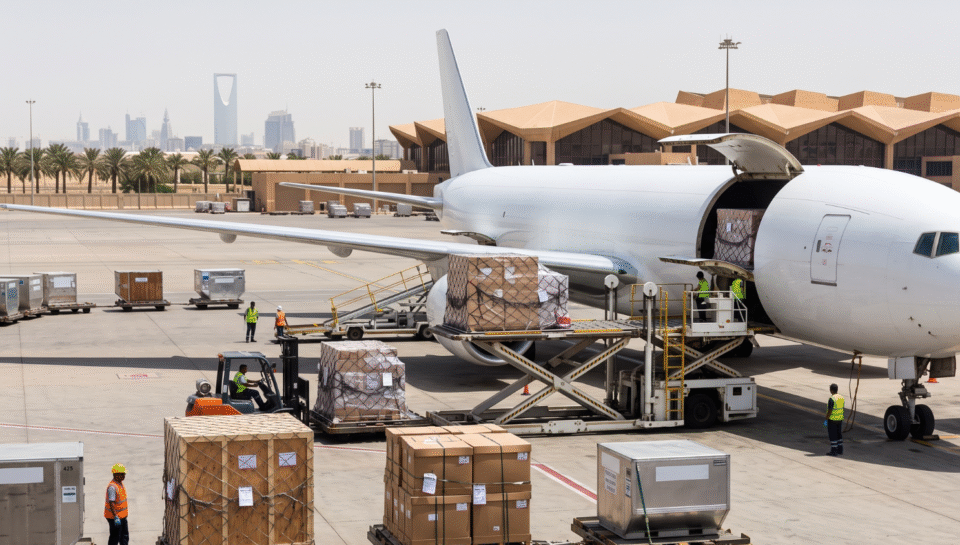
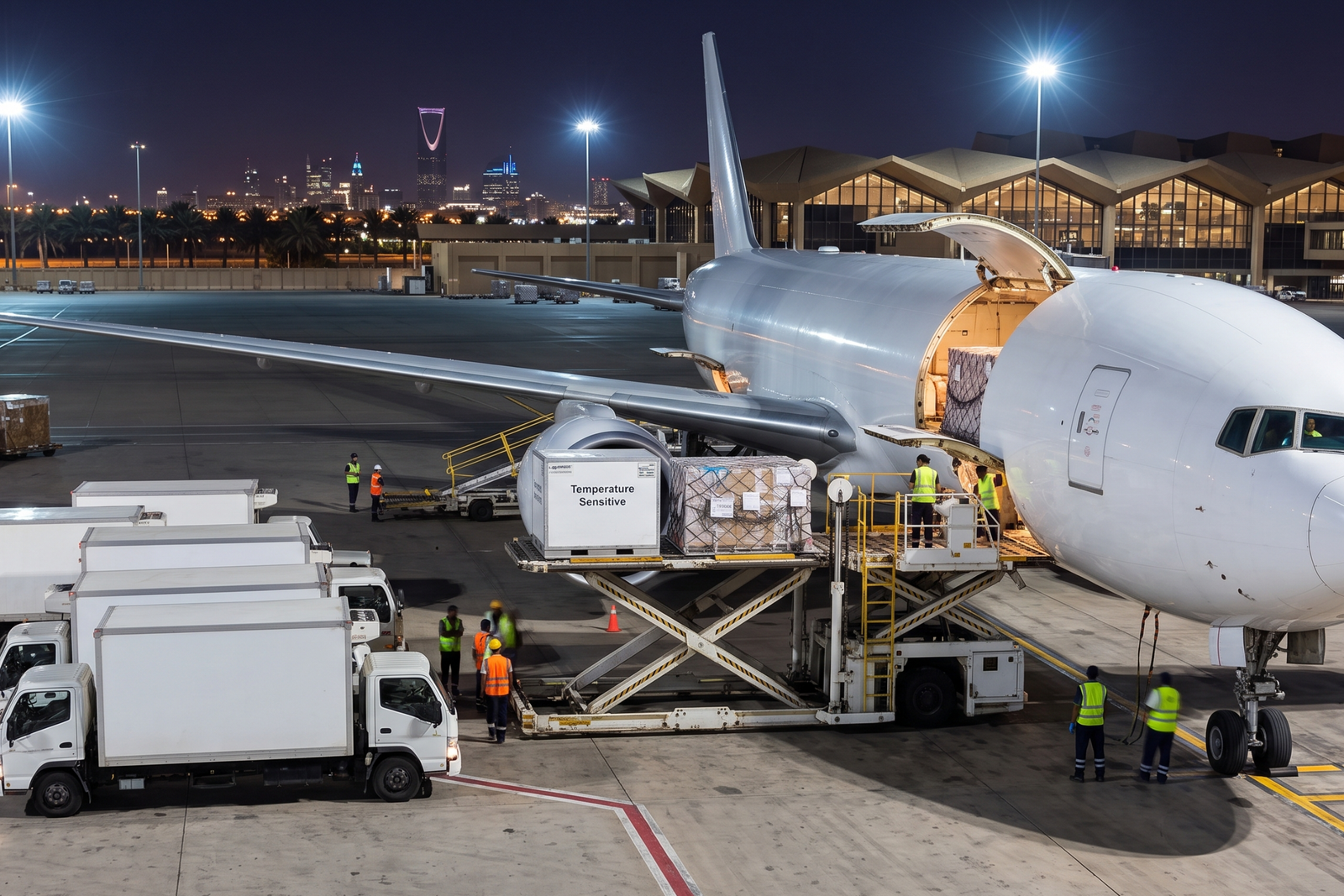
Once a shipment is booked, it gets consolidated with other cargo bound for the same route, weighed, documented, and handed to a carrier partner for loading. A Saudi logistics company managing this process typically works through partnerships with major airlines and freight forwarders rather than owning aircraft directly, which is how most Gulf-based operators connect regional shippers to airports worldwide.
Coverage matters here more than people expect. A provider handling shipments through every major airport in Saudi Arabia and the UAE can route cargo through whichever hub clears fastest for that specific destination, instead of forcing every shipment through one bottleneck. These air cargo services work because of airline partnerships, not owned aircraft, which is how most Gulf-based operators connect regional shippers to airports worldwide. According to the International Air Transport Association, global air cargo networks now connect several thousand city pairs, which is part of why routing flexibility changes real transit time.
Two Service Levels, Different Timelines
Not every shipment needs to fly on the next available plane. Express air freight gets cargo moving within a day when the situation demands it, medical supplies and production-line parts are common candidates. Standard air cargo, on the other hand, suits shipments with a few days of flexibility and a lower budget ceiling.
Choosing between them comes down to one honest question: what does a delay actually cost you? If a factory line stops without a part, express pays for itself. If its routine stock replenishment, standard service usually makes more financial sense.
What Does Actually Drive the Cost?
Air freight pricing rarely maps cleanly to a single number, and any source promising a flat rate before seeing the shipment details is skipping steps. Carriers price cargo on chargeable weight, which is the higher of actual weight or volumetric weight, so a large but light shipment can cost more than a small, dense one.
Beyond weight, several factors move the final figure: the service level chosen, fuel and security surcharges set by the carrier, the destination airport, and whether the goods need special handling like temperature control or hazardous materials protocols. Fresh produce and pharmaceuticals, for example, usually carry a premium tied to controlled storage and faster ground transfer.
Paperwork, Customs, and What Can’t Fly
Every air shipment into Saudi Arabia needs an air waybill, a commercial invoice, and supporting documentation matched to the cargo type. Missing paperwork is one of the most common reasons a shipment sits at the airport longer than the flight itself took. This is where a provider’s customs clearance support earns its keep, since it’s the step most likely to derail an otherwise fast shipment.
Certain goods simply cannot travel by air, regardless of how the shipper packages them. Explosives, large volumes of flammable material, toxic substances, and radioactive materials above set thresholds are restricted or banned outright under international air cargo rules.
Transit Times by Region
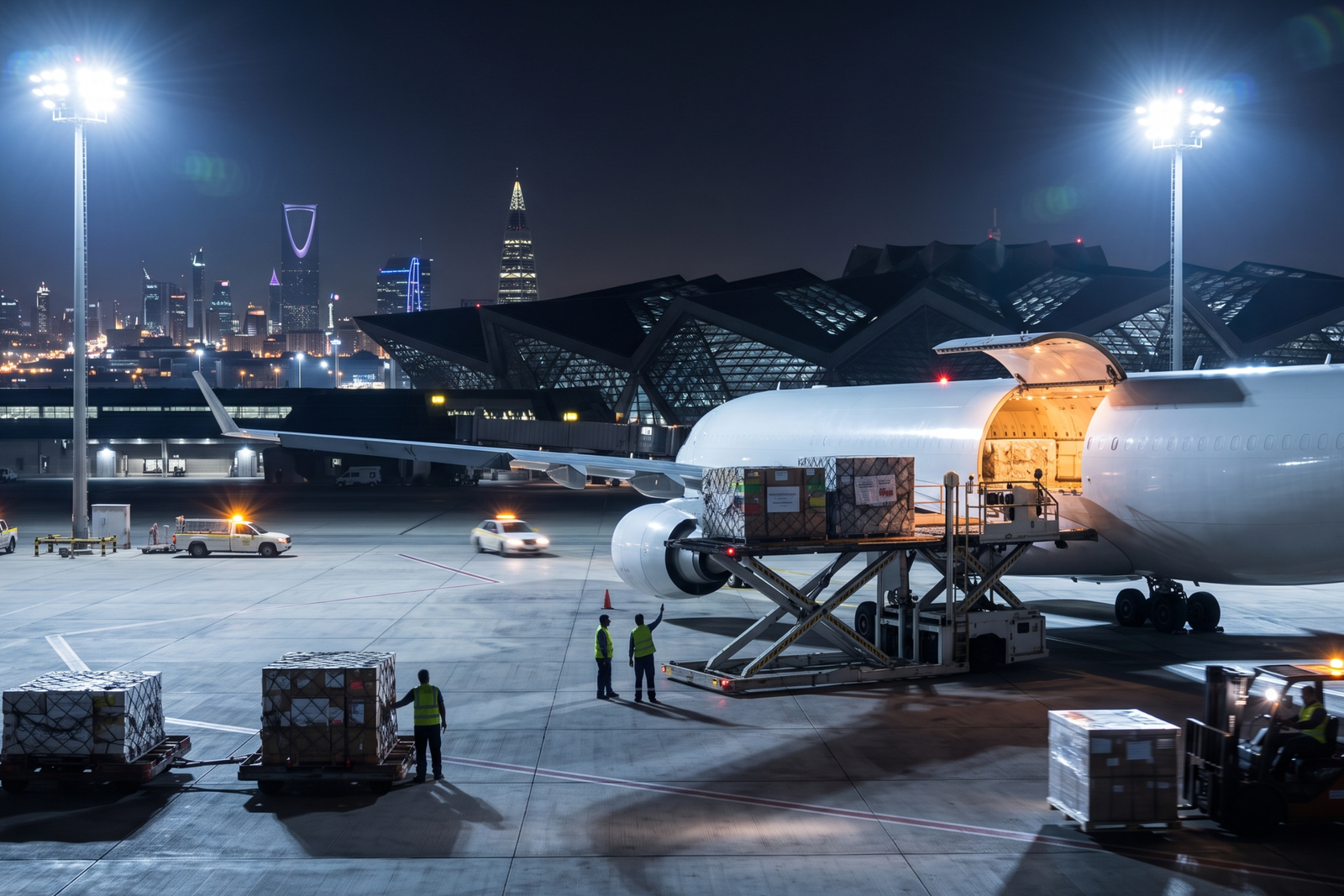
Flight time is only part of the equation, since customs processing on both ends adds to the total. As a general pattern, shipments from within the Gulf region typically arrive in one to two days. From Asia, transit tends to run two to five days. Europe usually lands in one to three days, and shipments from the Americas often take two to four days.
These ranges shift with route availability, seasonal cargo volume, and how quickly documentation clears on arrival. A shipment held up in customs can add days regardless of how fast the flight itself was.
Insurance and What Basic Liability Actually Covers
Carriers include a baseline liability for lost or damaged cargo, but it’s limited and rarely reflects the actual value of what’s being shipped. For anything beyond routine, low-value freight, comprehensive cargo insurance is worth the small percentage of value it costs, since basic liability alone can leave a real gap if something goes wrong mid-transit. Providers offering insurance options as part of their air freight service make this a single-step addition rather than a separate policy to chase down.
Final Thoughts
Air freight to Saudi Arabia works best when the shipper understands what’s actually being paid for: weight-based pricing, a service level matched to urgency, and documentation that clears customs without friction. None of that requires guesswork once the shipment details are known upfront.
FAQ
Depends entirely on the origin and service level. Gulf-region shipments usually land in one to two days. From Asia, expect two to five days, and from Europe, one to three. Express service can shave time off any of these, but customs processing still adds to the total.
Not really, at least not in practice. Commercial cargo aircraft handle everything from paperwork to multi-ton industrial equipment. Genuinely oversized or unusually heavy shipments might need a charter flight instead of standard cargo space, but that’s the exception, not the rule.
Explosives, large quantities of flammable material, toxic substances, and radioactive items above certain thresholds are the usual culprits. Rules vary slightly by airline, so a good forwarder checks eligibility before booking rather than after your cargo shows up at the terminal.
Carriers include basic liability automatically, but it’s capped and often doesn’t match what your cargo is actually worth. Comprehensive cargo insurance costs a small percentage of shipment value and closes that gap. Worth arranging for anything beyond low-value routine freight.
Speed, plain and simple. Express gets your shipment moving within a day, which matters when a production line is waiting on a part or medical supplies can’t sit around. Standard cargo works fine when you’ve got a few days of breathing room and want to keep costs down.