

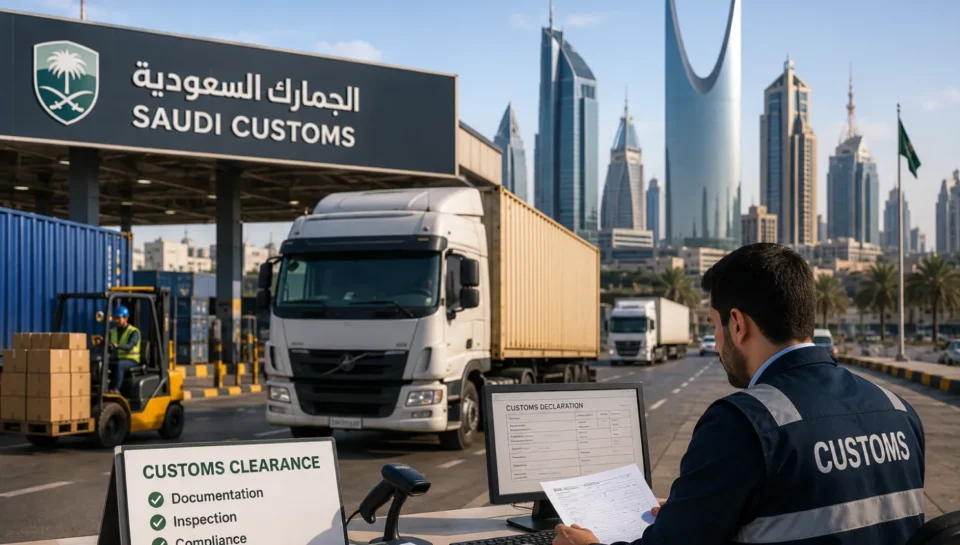
Customs Clearance Riyadh: Stop Your Cargo from Getting Stuck
Three days. Sometimes five. That is how long a shipment can sit at a Saudi port before anyone figures out what went wrong. By then, storage fees are running, and the supply chain is already off schedule. Customs clearance Riyadh is not forgiving of small mistakes. The platform is strict, the timelines are fixed, and Saudi Customs does not make exceptions for paperwork that almost matches. Importers who have been using the same process for years still get caught. Usually by the same handful of problems.
Here is what those problems are.
Table Of Contents
The FASAH Submission Window Is Not Flexible
Saudi Arabia’s FASAH platform handles every customs declaration in the country. All of it, digitally, before the cargo arrives. The rule is 48 hours. Submit your full document package through FASAH at least two days before your shipment reaches port so customs can review and pre-approve everything in advance.
When that pre-approval happens, containers can clear within 24 hours of docking. Miss the window and none of that applies. Your shipment arrives uncleared, joins a manual review queue, and sits. Every day it costs money.
What goes into that submission matters just as much as the timing. Commercial invoice, bill of lading, packing list, and certificate of origin. These four documents get cross-checked against each other by customs officers. The consignee name needs to match across all of them exactly, not approximately. A minor spelling variation between the invoice and the bill of lading is enough to trigger a hold. Khelogix Global provides end-to-end customs clearance in Saudi Arabia, covering FASAH submissions, document verification, and port coordination across Riyadh, Jeddah, and Dammam.
Wrong HS Codes Create Bigger Problems Than Most People Expect
Every product entering Saudi Arabia needs a Harmonized System code. That code determines the duty rate. Use the wrong one and customs flags the declaration.
Underpay duty, and you get a compliance review. Overpay and you lose money unnecessarily. Either outcome delays clearance while the issue works through the system.
The mistake that comes up most often is businesses reusing the HS code they applied in another country. Saudi Arabia follows the GCC Unified Customs Law. The tariff schedule is specific to that framework and does not always match what other markets use for the same product. The code has to be checked against the Saudi schedule before filing, not after the shipment is already at port.
VAT, Duties, and the Certificate of Origin Gap
Every import into Saudi Arabia carries 5% VAT on the declared customs value. No minimum threshold, no category exemptions. That is the baseline. Duty rates sit on top of it and vary by product type under the GCC tariff structure.
If the duty figure in the customs declaration is off, customs flags it for reassessment. That adds processing time directly to your clearance.
There is also a practical issue that catches importers off guard. Saudi Arabia holds trade agreements with several countries that reduce or eliminate customs duty. To access those rates, you need a valid Certificate of Origin proving eligibility. The certificate has to come from a recognized issuing authority in the country of export and meet Saudi Customs formatting requirements. If it does not, or if it is missing entirely, the standard duty rate applies. There is no fixing that after the declaration has been processed.


Restricted Goods Are Where Permits Get Forgotten
Outright prohibited items are well known. Weapons, alcohol, narcotics, pork products. Nobody is accidentally shipping those.
The harder category is restricted goods. These are products that can legally enter Saudi Arabia but require specific permits or certificates to be submitted alongside the shipment. Many importers either do not know their product falls into a restricted category or assume the permit can be sorted out after arrival. It cannot. Shipments in restricted categories that arrive without the required documentation go into inspection hold. Those holds can run for weeks depending on the nature of the goods and how backlogged the customs queue is.
What Businesses With Smooth Clearances Actually Do Differently
They submit early. That is the short answer. Filing through FASAH 48 hours out, with a verified and consistent document package, is what keeps clearances on the 24-hour track.
They also verify HS codes before filing, not during. And they make sure the Certificate of Origin is correct and present when trade agreement rates apply.
A licensed customs broker who operates inside the FASAH system handles all of this as a matter of process. HS code classification, duty calculations, pre-arrival submission, inspection coordination, and real-time status tracking. For most businesses, the broker fee is cheaper than a single week of port storage on a held container.
Khelogix Global covers customs clearance at Riyadh, Jeddah, and Dammam. The team manages every stage from document preparation and FASAH filing through duty assessment, inspection handling, and final cargo release.
The 21-Day Rule
Express shipments can stay in Saudi Customs storage for 21 days from arrival. After that, storage charges start. Leave it long enough, and the shipment gets returned to origin.
Most businesses do not track this actively until they are already close to the limit. At that point the costs stack up fast: storage fees, rescheduled transport, and delayed delivery windows. Planning around the 21-day mark before the shipment departs is a much simpler approach.
Final Thoughts on Customs Clearance Riyadh
The majority of delays in customs clearance Riyadh are not random. They trace back to late FASAH submissions, HS code mismatches, missing or invalid certificates, and restricted goods arriving without permits. Every one of those is avoidable with the right process in place before the shipment leaves.
FAQ
The commercial invoice, bill of lading, packing list, and certificate of origin are the core set. Some products also need import permits or product-specific certificates. Everything goes through FASAH before arrival. Details across all documents need to be consistent, not close. Customs officers check them against each other.
If documents are submitted through FASAH 48 hours before arrival and everything checks out, clearance can happen within 24 hours of the ship docking. That is the program Saudi Customs runs for compliant declarations. One documentation problem and that timeline goes out the window.
Not a legal requirement. But managing FASAH filings, HS code classification, duty calculations, and inspection coordination without specialist knowledge is where most self-managed clearances go sideways. One port delay usually costs more than the broker fee would have.
FASAH is the Saudi government’s digital customs clearance portal. Declarations, document submissions, duty payments, and clearance status updates all run through it. Getting the timing and accuracy of your FASAH submission right is the single biggest factor in whether your shipment clears on time.
Storage charges kick in automatically. Leave it past the limit and the shipment risks being sent back to where it came from. This catches businesses off guard more often than it should, especially during peak shipping periods when clearance queues are longer than usual.